Introduction
Learning how to cook is one of the most valuable life skills you can develop. Whether you want to prepare healthier meals, save money, or impress your family and friends, a Beginner Cooking Course is the perfect place to start. Cooking may seem intimidating at first, but with the right guidance and consistent practice, anyone can become confident in the kitchen.
This guide covers everything beginners need to know, from essential kitchen tools and cooking techniques to food safety, meal planning, and simple recipes. By the end of this article, you’ll have a strong foundation that will help you cook delicious homemade meals with confidence.
Why Take a Beginner Cooking Course?
A beginner cooking course teaches more than just recipes. It helps you understand the science behind cooking, proper food handling, and techniques that can be applied to thousands of dishes.
Benefits of Learning to Cook
- Save money by preparing meals at home.
- Eat healthier with fresh ingredients.
- Improve your confidence in the kitchen.
- Learn valuable life skills.
- Reduce dependence on fast food and takeout.
- Prepare meals for family and friends.
- Explore different cuisines from around the world.
Cooking is not about perfection—it’s about learning, experimenting, and enjoying the process.
Essential Kitchen Equipment
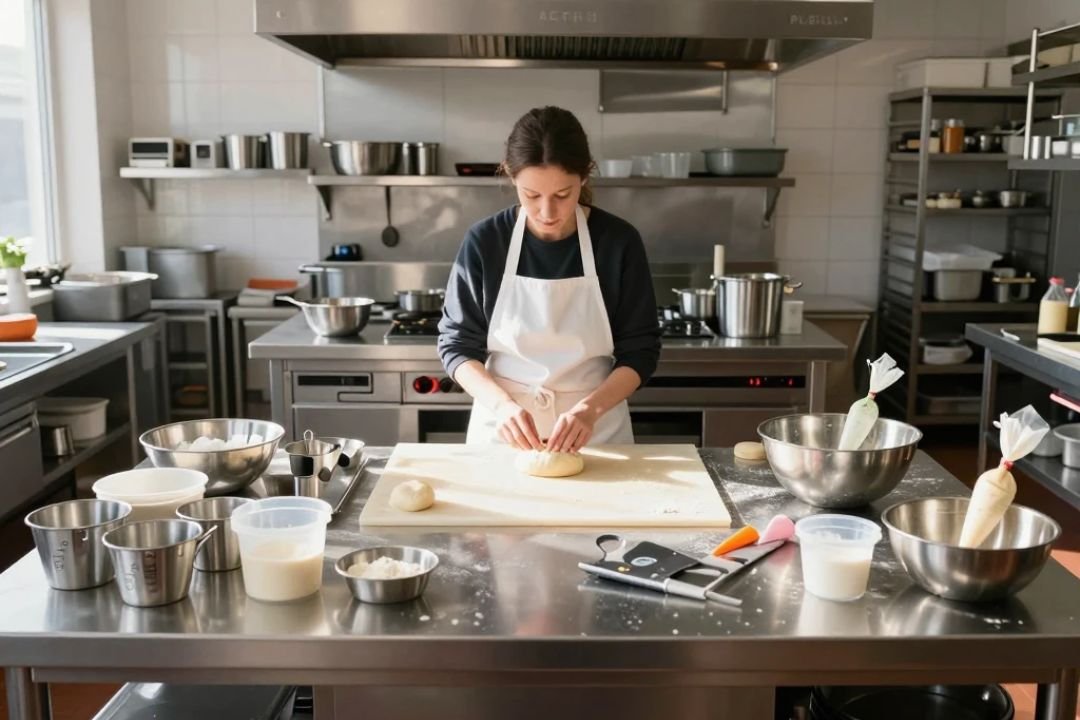
Before you start cooking, make sure your kitchen has the basic tools.
Must-Have Kitchen Tools
- Chef’s knife
- Cutting board
- Measuring cups
- Measuring spoons
- Mixing bowls
- Frying pan
- Saucepan
- Baking tray
- Wooden spoon
- Spatula
- Whisk
- Colander
- Vegetable peeler
- Can opener
- Food thermometer
You don’t need expensive equipment. A few quality tools are enough for beginners.
Essential Pantry Ingredients
A well-stocked pantry makes cooking much easier.
Dry Ingredients
- Rice
- Pasta
- Flour
- Sugar
- Salt
- Black pepper
- Baking powder
- Baking soda
Oils and Condiments
- Olive oil
- Vegetable oil
- Soy sauce
- Vinegar
- Mustard
- Tomato paste
Herbs and Spices
- Garlic powder
- Onion powder
- Paprika
- Oregano
- Basil
- Cumin
- Turmeric
- Chili powder
Keeping these ingredients on hand allows you to prepare countless meals.
Basic Cooking Skills Every Beginner Should Learn
1. Knife Skills
Learning how to safely hold and use a knife is essential.
Practice:
- Dicing onions
- Slicing tomatoes
- Chopping herbs
- Julienne vegetables
Proper knife skills improve speed and safety.
2. Measuring Ingredients
Accurate measurements are especially important for baking.
Learn the difference between:
- Cups
- Tablespoons
- Teaspoons
- Grams
- Milliliters
Following recipe measurements ensures consistent results.
3. Reading Recipes
Always read the recipe completely before starting.
Check:
- Ingredients
- Cooking times
- Equipment needed
- Preparation steps
Preparation prevents mistakes.
4. Food Safety
Food safety is one of the most important lessons in any beginner cooking course.
Remember these rules:
- Wash your hands before cooking.
- Clean cutting boards after raw meat.
- Store food properly.
- Refrigerate leftovers quickly.
- Cook meat to safe temperatures.
Safe cooking protects your health.
Basic Cooking Techniques
Boiling
Perfect for:
- Eggs
- Pasta
- Potatoes
- Vegetables
Frying
Ideal for:
- Eggs
- Chicken
- Fish
- Vegetables
Use medium heat to avoid burning food.
Baking
Great for:
- Cakes
- Cookies
- Bread
- Casseroles
Always preheat your oven.
Roasting
Roasting brings out natural flavors.
Best for:
- Chicken
- Beef
- Potatoes
- Carrots
- Broccoli
Steaming
Steaming helps preserve nutrients.
Popular choices include:
- Broccoli
- Spinach
- Fish
- Dumplings
Simple Recipes for Beginners
Scrambled Eggs
Ingredients:
- 2 eggs
- Butter
- Salt
- Pepper
Cook over low heat while stirring gently until creamy.
Pasta with Tomato Sauce
Ingredients:
- Pasta
- Olive oil
- Garlic
- Tomato sauce
- Parmesan cheese
A quick and satisfying meal ready in under 30 minutes.
Grilled Chicken
Season chicken with:
- Salt
- Pepper
- Garlic powder
- Paprika
Cook until fully done and juicy.
Vegetable Stir-Fry
Use vegetables like:
- Bell peppers
- Broccoli
- Carrots
- Mushrooms
Cook quickly over high heat for a healthy meal.
Fresh Garden Salad
Combine:
- Lettuce
- Tomatoes
- Cucumbers
- Olive oil
- Lemon juice
A refreshing side dish that pairs well with almost any meal.
Common Beginner Cooking Mistakes
Many beginners make similar mistakes.
Avoid these common problems:
- Cooking on heat that’s too high.
- Skipping recipe instructions.
- Forgetting to taste food.
- Overcrowding the pan.
- Using dull knives.
- Overcooking vegetables.
- Adding too much salt.
Learning from mistakes is part of becoming a better cook.
Meal Planning Tips
Meal planning saves both time and money.
Weekly Meal Plan Example
Monday: Grilled Chicken with Rice
Tuesday: Pasta with Vegetables
Wednesday: Chicken Stir-Fry
Thursday: Soup and Bread
Friday: Homemade Pizza
Saturday: Beef Tacos
Sunday: Baked Fish with Vegetables
Planning ahead reduces food waste and makes grocery shopping easier.
Time-Saving Kitchen Tips
- Prep vegetables in advance.
- Keep spices organized.
- Cook extra portions for leftovers.
- Label food containers.
- Freeze meals for busy days.
- Clean while cooking.
- Read recipes before starting.
These habits make cooking more enjoyable.
How to Improve Your Cooking Skills
Practice consistently.
You can improve by:
- Trying one new recipe every week.
- Learning one cooking technique at a time.
- Watching professional cooking demonstrations.
- Experimenting with herbs and spices.
- Keeping a cooking journal.
- Asking experienced cooks for advice.
Cooking is a lifelong learning experience.
Frequently Asked Questions
Is a beginner cooking course worth it?
Yes. It builds confidence, teaches essential techniques, and helps you prepare healthier meals at home.
How long does it take to learn cooking?
Most beginners become comfortable with basic recipes after a few weeks of regular practice.
What should beginners cook first?
Start with simple recipes such as scrambled eggs, pasta, grilled chicken, soups, stir-fries, and salads.
Do I need expensive kitchen equipment?
No. A few quality tools are enough to prepare hundreds of delicious meals.
Can anyone learn cooking?
Absolutely. Cooking is a practical skill that improves with patience and practice.
Conclusion
A Beginner Cooking Course is the ideal starting point for anyone who wants to build confidence in the kitchen. By mastering basic cooking techniques, learning food safety, using essential kitchen tools, and practicing simple recipes, you’ll develop skills that last a lifetime.
Remember that every experienced chef was once a beginner. Start with easy meals, practice regularly, and don’t be afraid to make mistakes. Over time, you’ll discover your own cooking style, experiment with new flavors, and enjoy preparing delicious homemade meals for yourself and your loved ones.
Whether your goal is healthier eating, saving money, or simply enjoying the art of cooking, taking the first step today can lead to a lifetime of culinary success.