Introduction
Baking is both an art and a science. While beginners learn the basics of measuring ingredients and following recipes, an Advanced Baking Course takes your skills to a professional level. It focuses on precision, advanced techniques, ingredient science, pastry creation, artisan bread, cake decorating, and dessert presentation. Whether you dream of becoming a professional baker, opening your own bakery, or simply creating bakery-quality treats at home, advanced baking skills can help you achieve your goals.
In this comprehensive guide, you’ll learn what an advanced baking course includes, the essential tools and ingredients, professional baking techniques, common mistakes to avoid, and tips for becoming a skilled baker.
What Is an Advanced Baking Course?
An Advanced Baking Course is designed for individuals who already understand basic baking principles and want to improve their expertise. Unlike beginner courses, advanced training emphasizes precision, creativity, and consistency while introducing complex recipes and professional methods.
Students typically learn:
- Artisan bread baking
- French pastries
- Cake decorating
- Chocolate work
- Advanced dessert preparation
- Dough fermentation
- Baking science
- Professional kitchen management
- Dessert presentation
- Recipe development
The goal is to create bakery-quality products with confidence and consistency.
Why Choose an Advanced Baking Course?
Taking an advanced baking course offers numerous benefits beyond learning new recipes.
Key Benefits
- Master professional baking techniques.
- Improve cake decorating skills.
- Learn artisan bread production.
- Understand ingredient chemistry.
- Create premium desserts.
- Increase career opportunities.
- Start your own bakery business.
- Build confidence in commercial baking.
- Learn food safety standards.
- Develop creative baking skills.
Whether you’re baking for family or customers, advanced knowledge helps you produce consistent, high-quality results.
Essential Baking Equipment
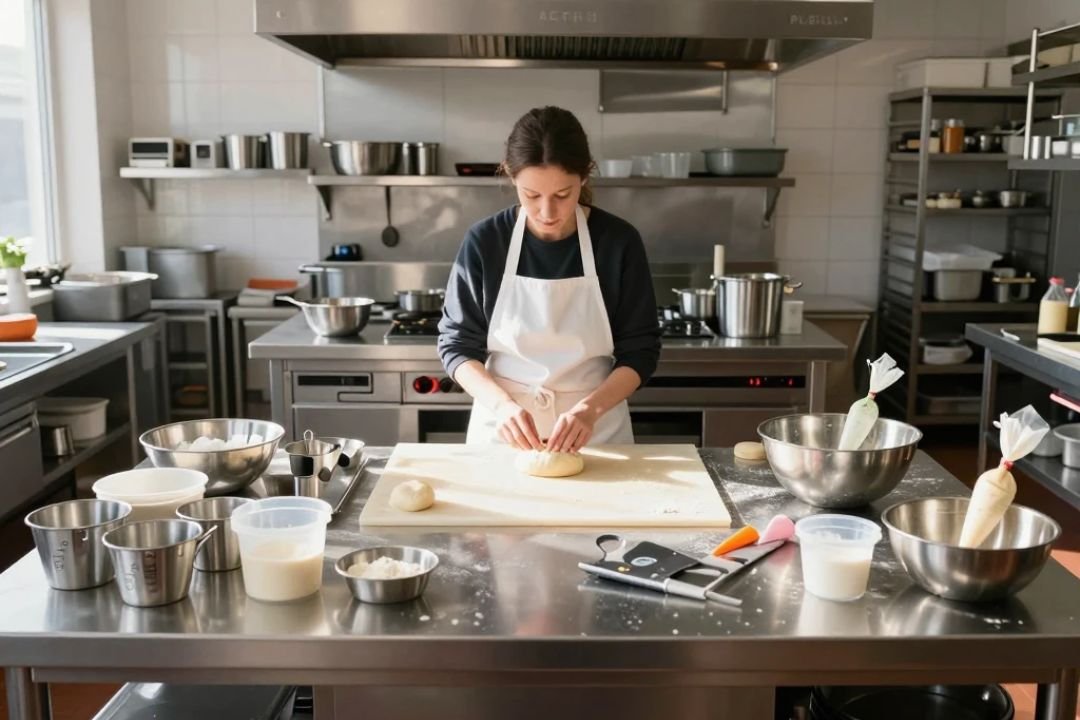
Professional baking requires reliable tools and equipment.
Must-Have Baking Tools
- Stand mixer
- Digital kitchen scale
- Oven thermometer
- Silicone baking mats
- Mixing bowls
- Measuring cups and spoons
- Offset spatula
- Bench scraper
- Rolling pin
- Cooling racks
- Cake turntable
- Piping bags
- Decorating tips
- Pastry brush
- Dough scraper
Quality equipment improves accuracy and makes baking more efficient.
Important Baking Ingredients
Advanced baking depends on understanding ingredient functions.
Flour
Different flours create different textures.
- Bread flour
- Cake flour
- Pastry flour
- All-purpose flour
Dairy Products
- Butter
- Heavy cream
- Whole milk
- Cream cheese
Sweeteners
- Granulated sugar
- Brown sugar
- Powdered sugar
- Honey
- Corn syrup
Flavor Enhancers
- Vanilla extract
- Almond extract
- Cocoa powder
- Espresso powder
- Citrus zest
Leavening Agents
- Baking powder
- Baking soda
- Active dry yeast
- Instant yeast
Knowing how these ingredients interact is essential for successful baking.
Advanced Baking Techniques
Laminated Dough
Laminated dough involves folding butter into dough multiple times to create delicate, flaky layers.
Examples include:
- Croissants
- Danish pastries
- Puff pastry
Maintaining proper temperature is critical to success.
Artisan Bread Baking
Professional bread requires attention to:
- Hydration levels
- Gluten development
- Bulk fermentation
- Shaping
- Scoring
- Steam baking
Popular artisan breads include:
- Sourdough
- Baguettes
- Ciabatta
- Focaccia
Cake Decorating
Advanced cake decoration includes:
- Buttercream smoothing
- Fondant covering
- Sugar flowers
- Piping techniques
- Textured finishes
- Metallic decorations
Presentation plays a significant role in professional baking.
Chocolate Tempering
Tempering chocolate creates:
- Smooth texture
- Glossy finish
- Crisp snap
- Stable decorations
Proper temperature control prevents bloom and dull surfaces.
Pastry Cream and Fillings
Professional bakers prepare fillings such as:
- Vanilla pastry cream
- Chocolate ganache
- Fruit curds
- Bavarian cream
- Mousses
These fillings enhance cakes, pastries, and desserts.
Baking Science Explained
Successful baking depends on understanding food science.
Gluten Development
Gluten forms when flour and water combine.
Too much mixing creates tough baked goods.
Too little mixing results in weak structure.
Yeast Fermentation
Yeast converts sugar into carbon dioxide.
This process helps dough rise while developing flavor.
Proper fermentation improves texture and aroma.
Oven Spring
The first few minutes of baking produce rapid expansion.
A properly preheated oven ensures excellent oven spring.
Moisture Balance
Moisture affects:
- Softness
- Shelf life
- Texture
- Crumb structure
Balancing wet and dry ingredients is essential.
Professional Cake Baking Tips
To bake perfect cakes:
- Use room-temperature ingredients.
- Measure accurately with a digital scale.
- Do not overmix the batter.
- Preheat the oven.
- Rotate pans halfway through baking.
- Allow cakes to cool completely before frosting.
These habits produce light, moist, and evenly baked cakes.
Common Baking Mistakes
Even experienced bakers make mistakes.
Avoid these common problems:
- Incorrect measurements
- Overmixing batter
- Underbaking cakes
- Opening the oven too early
- Using expired baking powder
- Poor temperature control
- Skipping ingredient preparation
- Overproofing dough
Attention to detail makes all the difference.
Food Safety in Baking
Professional bakers follow strict hygiene practices.
Important guidelines include:
- Wash hands frequently.
- Store ingredients properly.
- Refrigerate dairy products.
- Use clean equipment.
- Avoid cross-contamination.
- Monitor food temperatures.
- Label stored products.
Food safety protects both quality and customer health.
Career Opportunities After an Advanced Baking Course
Completing an advanced baking course can open many career paths.
Possible careers include:
- Professional Baker
- Pastry Chef
- Cake Designer
- Bakery Owner
- Dessert Specialist
- Baking Instructor
- Product Developer
- Hotel Pastry Chef
- Catering Baker
- Food Entrepreneur
The demand for skilled bakers continues to grow in restaurants, hotels, cafés, and specialty bakeries.
Tips to Become a Better Baker
Improve your skills by following these strategies:
- Practice regularly.
- Keep detailed baking notes.
- Learn from professional chefs.
- Experiment with flavors.
- Study ingredient functions.
- Master one technique before moving to the next.
- Stay updated with baking trends.
- Focus on precision and patience.
Great baking comes from consistency and continuous learning.
Frequently Asked Questions
Is an advanced baking course suitable for beginners?
No. It is recommended for individuals who already understand basic baking techniques and want to improve their professional skills.
How long does an advanced baking course take?
Depending on the program, it may last from a few weeks to several months.
What skills will I learn?
You’ll learn artisan bread baking, pastry making, cake decorating, chocolate tempering, dessert presentation, recipe development, and professional baking techniques.
Do I need expensive equipment?
Professional tools improve efficiency, but many advanced techniques can be practiced at home with quality basic equipment.
Can I start a bakery after completing the course?
Yes. Many students use advanced baking knowledge to launch home bakeries, cafés, or professional baking businesses.
Conclusion
An Advanced Baking Course is the perfect opportunity to transform your passion for baking into professional expertise. By mastering artisan bread, pastries, cake decorating, chocolate work, and baking science, you’ll gain the confidence to create bakery-quality products every time.
Success in baking comes from precision, patience, creativity, and consistent practice. Invest in quality tools, understand your ingredients, and continue refining your techniques. Whether your goal is to impress family, work as a pastry chef, or build a successful bakery business, advanced baking skills provide the foundation for long-term success.
Start your advanced baking journey today, and unlock endless possibilities in the exciting world of professional baking.